IMT had the pleasure of welcoming Professor Jari Hämäläinen from LUT University (Finland) at its Technological Universities, IMT Atlantique, IMT Mines Albi and IMT Nord Europe. As an expert in industrial mathematics and fluid dynamics, and an active member of the EULiST European University alliance, his visit highlighted new opportunities for scientific and academic collaboration. We took this opportunity to ask him a few questions about his work, his impressions, and his vision for European cooperation.
What inspired your visit to IMT Technological Universities, and what key insights did you take away—particularly in terms of research topics and complementarities with LUT?
First, I visited very shortly IMT Atlantique and IMT Nord Europe on in a connection of my other travelling in France in June 2025. Then I made one-week visits both to IMT Nord Europe and IMT Mines Albi in October 2025 and gave visiting lectures on CFD-based optimization.
IMT Atlantique has very similar research profile to what we have at LUT. LUT’s strategic research focus areas (2021-2025) are clean air, water and energy (plus sustainable business). IMT Atlantique and its Energy and Environmental Systems Department covers very much the same. I would say that as a whole LUT has most common with IMT Atlantique. I am not personally an expert of water, air or energy, but as an industrial mathematician I also found collaboration on mathematical modelling and optimization with IMT Atlantique. I see lots of potential collaboration in water treatment and clean energy research between IMT Atlantique and LUT University.
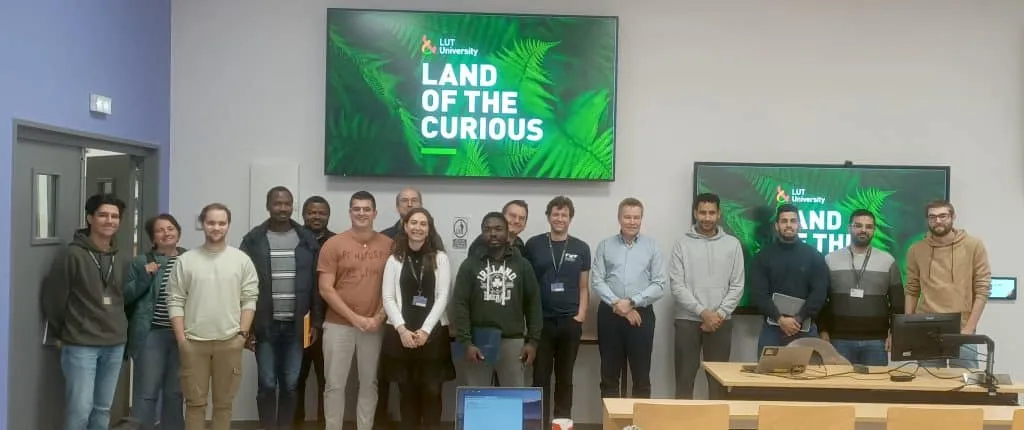
I would say that IMT Nord Europe is easy to collaborate in that sense that we have so much common in computational fluid dynamics (CFD), but on the other hand I did not find so much complementary topics. Or, to re-wording my comment, I do not feel that I have personally so much to give them at IMT Nord Europe, because they are already so good in CFD. I have more experience developing in-house CFD software and integrating CFD with mathematical optimization, but commercial CFD software are getting better in CFD and bringing novel CFD-based optimization methods in their implementation that it is not necessary to develop own in-house software nowadays.
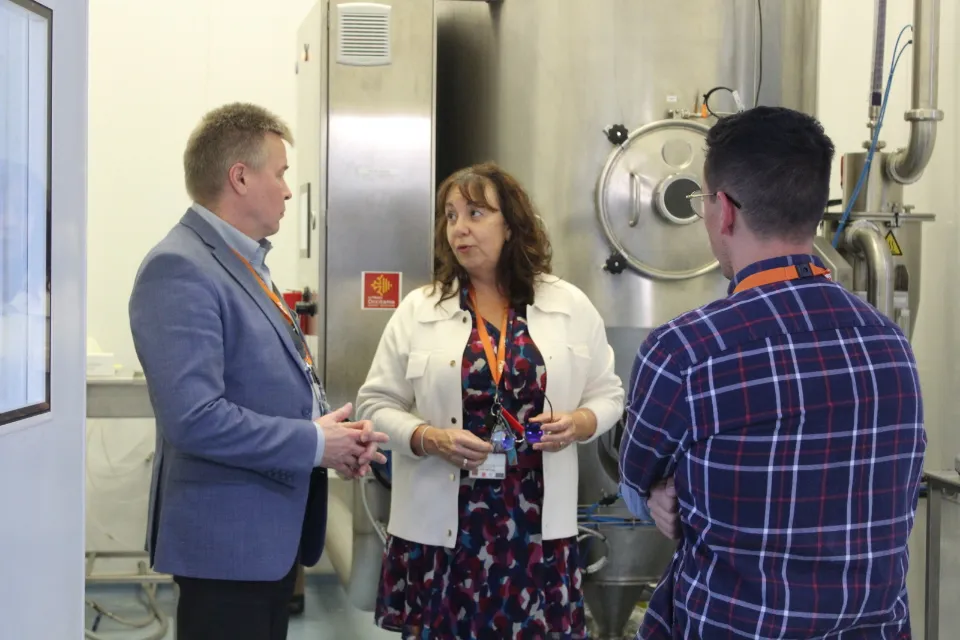
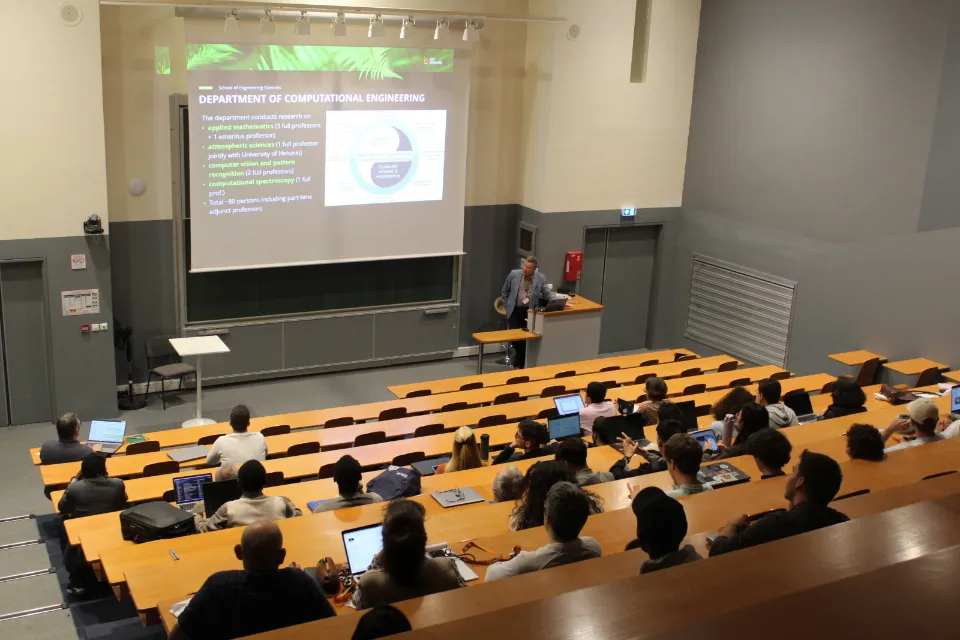
LUT is reformulating its strategic research topics (2026-2030) to planetary resources, energy transition, digital revolution, and business and society. Especially LUT’s planetary resources resonate with IMT Mines Albi’s biomass engineering, waste and renewable energy in the RAPSODEE center. For example, we may have different biomass sources in Finland and in France, but research goals are similar. LUT’s research director for future bio-forest industry, Taija Hämäläinen joined the visit to IMT Mines Albi. There are plenty of potential research topics in biomass field. Personally, I found joint research topics with powder engineering. Professor Cendrine Gatumel has a strong research group on experimental studies of powders, and I was invited to collaborate within mathematical modelling. In addition to these topics, we made a connection between the IMT Industrial Engineering Center to LUT’s social sciences and sustainability sciences, and they discussed a joint European project proposal.
What concrete avenues for collaboration do you foresee between LUT and IMT, in research or student exchange for example?
We have already prepared a funding application together with Professor Cendrine Gatumel at IMT Mines Albi about modelling powder flows. If we are successful, we will start joint supervising of a doctoral student who could also be a cotutelle student, meaning that he/she would get a doctoral degree in both universities.
I have continued discussions with Prof. Luis Fabian Fuentes Cortes from IMT Atlantique, and we had had a couple of on-line meetings with his doctoral student about multi-objective optimization and fast-to-solve mathematical models. I am also happy to organize visits from IMT to LUT and vice versa. I am not searching for research collaboration to me personally only but finding collaborative between other researchers at LUT and IMT as well.
What are, in your view, the most pressing challenges and promising opportunities in transdisciplinary research within EULiST?
I would say that always when we are talking about cotutelle agreements, we are facing different kind of administrative / bureaucratic obstacles between different European countries. This is one problem also between the EULIST member universities. We should push away the administrative regulations and concentrate more on learning outcomes. I believe that we share the common opinion what does it mean to be a Doctor of Engineering, as an example. We should find positive ways of doing double doctoral degrees instead of finding obstacles not to do those. I would say that when there is a will, there is also a way to solve all the obstacles.